A Massive Untapped Energy Resource
Every year, European industries discard vast amounts of thermal energy—energy that could instead be converted into electricity. According to the latest KCORC report, Thermal Energy Harvesting: The Path to Tapping into a Large CO2-free European Power Source, at least 150 TWh/year of electricity could be generated by capturing industrial waste heat using Organic Rankine Cycle (ORC) technology. However, some estimates place this potential as high as 280–300 TWh/year, underscoring the vast opportunity for energy recovery and efficiency improvements. To put this into perspective, the 150 TWh/year estimate alone is equivalent to the annual electricity consumption of the Netherlands and Denmark combined.
Despite this massive potential, much of this energy remains unused due to policy gaps, financial constraints, and lack of industry awareness. ORC technology offers a way to address this challenge, making energy recovery both viable and economically attractive.


Waste Heat Recovery: A Key Solution for Industrial Efficiency
Industries such as cement, glass, iron and steel, petrochemicals, pulp and paper, and food & beverage are essential to modern infrastructure, manufacturing, and daily life. These industries generate significant amounts of waste heat, much of which remains untapped. While some, mainly high-temp, recovery solutions have been implemented, the majority of this energy is still lost.
- The KCORC report estimates that European industries discard over 880 TWh of heat energy annually, yet only a fraction of this is recovered.
- More than half of this waste heat falls below 300°C, making it a prime candidate for ORC-based electricity generation.
- However, only a small portion of this lower-temperature heat is currently utilized for power generation.
One example industry with high potential for ORC recovery is pulp and paper, which wastes approximately 125.5 TWh of heat energy annually, with a significant portion below 200°C. Since many processes in this sector rely on moderate-temperature steam and hot water, low-temperature ORC solutions are well-suited to efficiently capture and convert this energy into electricity, improving energy efficiency and reducing external power dependency.
The chart below from KCORC’s report visually illustrates how much of this waste heat remains untapped across various industries, emphasizing the opportunity for ORC technology to transform this underutilized energy into a valuable power source.


Beyond Industry: The Maritime Energy Efficiency Opportunity
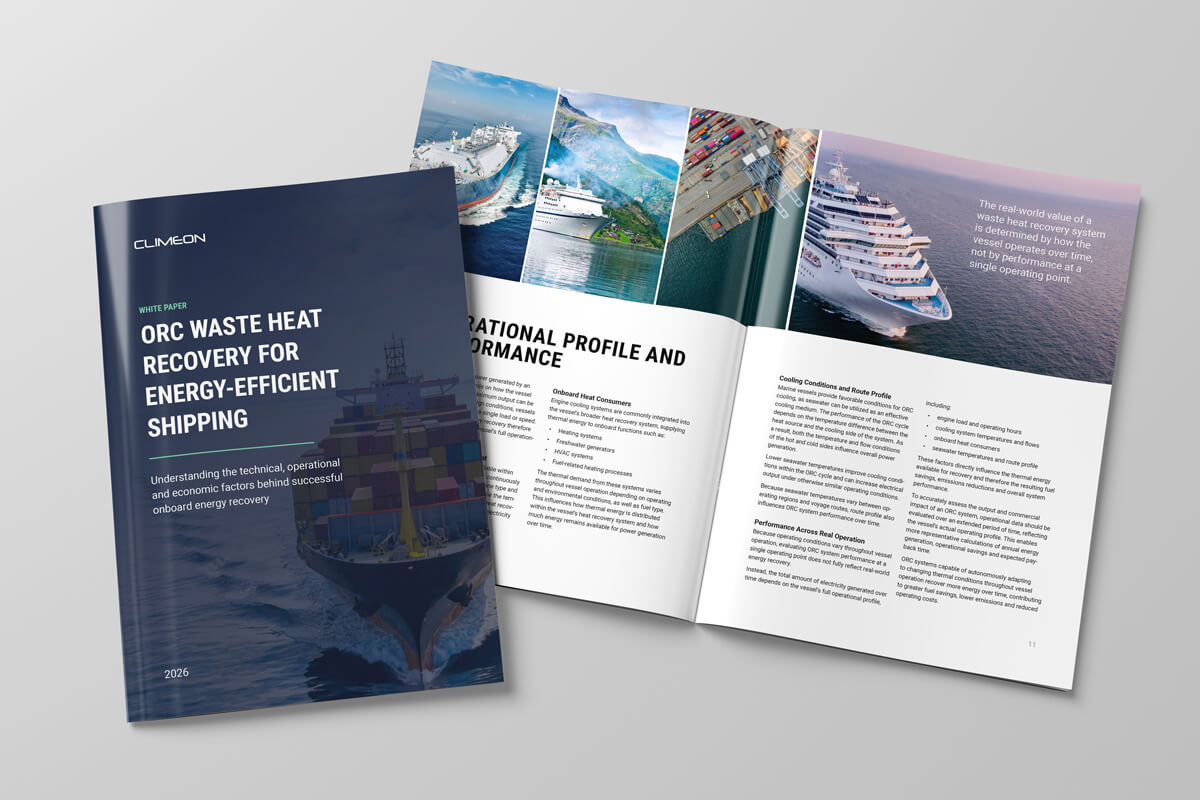
While industrial applications represent a major opportunity for waste heat recovery, the KCORC report also highlights how marine propulsion systems generate substantial amounts of untapped waste heat. Large ocean-going vessels, ferries, and transport ships continuously operate engines that produce excess thermal energy—representing an overlooked source of energy efficiency improvements.
A key advantage of ORC technology in the maritime sector is that ships have access to abundant cooling water, making the heat recovery process more efficient than in land-based applications that rely on air-cooled condensers. This natural thermodynamic benefit enhances ORC performance, with the KCORC report estimating fuel consumption reductions of 3.5% to 4.5%—a significant potential savings, though higher than some other industry estimates.
Beyond thermodynamic efficiency, the maritime industry has stronger regulatory and financial incentives for adopting ORC technology compared to land-based industries:
- Energy efficiency regulations: EEXI (Energy Efficiency Existing Ship Index) and EEDI (Energy Efficiency Design Index) require ship operators to improve vessel efficiency.
- Fuel cost savings: Fuel is a major operating expense, so even small efficiency gains provide significant financial benefits.
- Emissions regulations: The EU Emissions Trading System (ETS) and the FuelEU Maritime Regulation enforce strict greenhouse gas reduction targets, driving the need for energy-saving solutions like ORC.
These factors create strong incentives for shipowners to invest in waste heat recovery, aligning with both regulatory compliance and cost reduction goals.
Policy & Market Growth: A Call to Action
Despite the clear economic and environmental benefits, ORC adoption in Europe remains well below its potential. To fully realize the potential of ORC waste heat recovery, clearer regulatory support and stronger market incentives are needed. The European market for ORC technology is poised for rapid growth, driven by:
- EU Energy Efficiency Regulations, such as the Energy Efficiency Directive (EED) and FuelEU Maritime Regulation, which encourage waste heat recovery but need to explicitly support ORC as a waste-heat-to-power solution.
- Industrial decarbonization targets, pushing manufacturers to improve efficiency and reduce CO2 emissions, making ORC technology a necessary investment rather than an optional one.
- Electricity market volatility, as energy prices fluctuate due to geopolitical tensions and supply chain disruptions, making on-site power generation from recovered heat a strategic advantage.
The Path Forward: Turning Waste Heat into Valuable Power
Europe has a unique opportunity to maximize its waste heat recovery potential and significantly reduce energy waste. However, achieving this goal will require collaborative efforts from policymakers, industry leaders, and technology providers.
- Policymakers should ensure that ORC technology is explicitly recognized in EU energy efficiency policies and industrial decarbonization strategies.
- Industries should take proactive steps to assess and invest in waste heat recovery solutions, particularly in energy-intensive sectors like steel, cement, petrochemicals, and maritime transport.
- Technology providers must work to demonstrate the financial viability of ORC systems and offer scalable, easy-to-integrate solutions to drive wider adoption.
The 150 TWh/year of conservatively estimated electricity generation potential is just the beginning. If regulatory frameworks and investment conditions improve, Europe can lead the way in transforming waste heat into a valuable energy resource—boosting energy security, cutting emissions, and creating new economic opportunities.
To learn more, explore the KCORC report’s full findings to see how ORC technology is helping industries unlock more efficiency and sustainability.