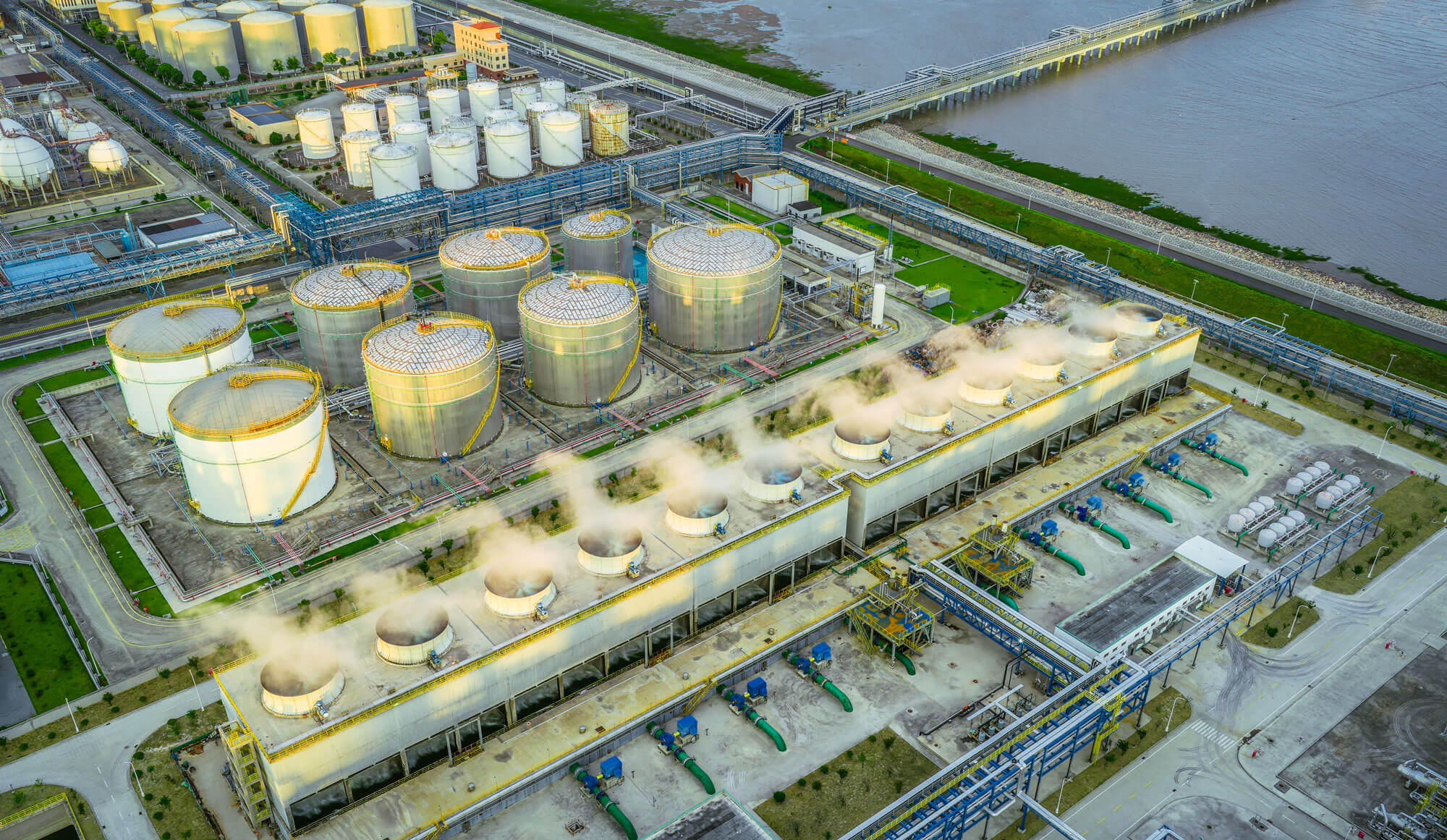
Sulphuric acid production releases large amounts of heat. While higher-temperature energy is often recovered for steam generation or other uses, a substantial share of the energy balance can remain in acid cooling.
European reference data shows that around one-third of the process energy in a sulphur-burning double-contact plant can be associated with acid cooling in the absorption stages. For sulphuric acid producers looking to improve energy efficiency and make better use of energy already available within the process, low-temperature waste heat recovery can represent a significant additional opportunity. (European Commission BREF)
How large is the low-temperature heat opportunity?
The exact heat balance varies with plant design, SO₂ source and existing heat-recovery systems, but European reference data shows that absorption cooling can represent a large and continuous source of lower-temperature heat.
In one double-contact reference configuration, approximately 1.19 GJ of heat per tonne of sulphuric acid is removed at intermediate absorption and a further 0.64 GJ/t at final absorption, or around 1.8 GJ/t combined. Scaled to a 1,000 t/day plant, that corresponds to roughly 21 MW of thermal energy in these two stages alone.
The intermediate absorber can account for a particularly large share of this duty. In a separate sulphur-burning reference balance, intermediate absorber acid cooling represents 21–24% of the total energy balance, compared with 7–9% at the final absorber. (European Commission BREF)
These figures are important because they show that the low-temperature heat available in sulphuric acid production is not a small residual stream. It can amount to tens of megawatts of thermal capacity, concentrated in cooling duties that operate continuously as part of normal acid production. Where this heat is not already used elsewhere, it can represent a substantial source of energy for power generation.
Metallurgical and smelter acid plants: an especially strong fit
In acid plants treating metallurgical gases, the cleaned gas from the smelter must be reheated before conversion. Most of the reaction heat is used for this, leaving little for steam generation. In a European reference case for a 1,000 t/day double-contact plant, acid cooling accounts for 92% of the energy balance, about 2.4 GJ per tonne of acid. (EU-BRITE) Most of it comes from the absorber circuits, at temperatures well suited to low-temperature power generation.
With little competing steam recovery, high on-site electricity demand and often few other uses for heat at these temperatures, metallurgical sites are a natural fit for waste heat to power. HeatPower also adjusts automatically to the variations in gas flow and SO₂ concentration typical of smelter operation.
This makes acid plants integrated with copper, zinc and other metallurgical operations particularly interesting to assess for further heat recovery. The temperatures and best use of the recovered energy differ between plants, but the scale of the acid-cooling duty can be substantial.
Why turn low-temperature heat into electricity?
Heat recovered from sulphuric acid production can create value in different ways. Depending on the plant configuration, it may already be used for steam production, process heating, hot-water production or district heating. Some sulphuric acid plants are also specifically designed to recover absorption heat as low-pressure steam.
But direct heat recovery depends on having a useful destination for that energy at the right temperature and when the heat is available.
Where that demand is limited, waste heat to power provides another way to create value from energy that would otherwise be rejected. The electricity generated can be used throughout the plant, reducing purchased power and increasing on-site electricity generation.
For sulphuric acid plants with continuous cooling duties and high annual operating hours, this can create a particularly attractive business case.

The strongest opportunities typically combine substantial continuous heat, high annual operating hours, strong on-site electricity demand, high purchased electricity costs and limited alternative use for the heat.
How low-temperature heat from sulphuric acid production becomes electricity
Organic Rankine Cycle, or ORC, technology converts heat into electricity using a closed-loop process. It works in a similar way to a steam power system, but is designed to generate power from much lower-temperature heat.
Instead of using water to produce steam, the ORC uses a fluid that evaporates at a lower temperature. The heat causes this fluid to vaporise and drive a turbine connected to a generator. It is then cooled, condensed and reused in a continuous cycle.
But not all ORC systems are designed around the same heat conditions. Performance and project economics depend strongly on how well the system is suited to the temperatures actually available.
Climeon HeatPower 300 is purpose-built for low-temperature waste heat. Climeon’s current HeatPower platform is designed around heat sources from approximately 75–105°C, with power output of up to 355 kW per unit and the ability to combine multiple units where more thermal energy is available.
HeatPower remains separate from the sulphuric acid process, with the heat transferred to the ORC through an intermediate hot-water loop.
Recovering More Heat Without Redesigning the Process
Recovering more heat from absorption does not have to mean redesigning the absorption process itself. Approaches that raise absorber acid temperatures to recover higher-grade energy typically involve replacing core equipment and operating the acid circuit under tighter conditions. Such projects are best suited to major revamps or new builds.
HeatPower takes a different route. The absorption towers and acid chemistry remain unchanged, and the plant continues to operate within its established temperature and concentration ranges. Heat is taken from the acid cooling duty through a hot-water loop. The existing acid coolers can remain in place, so acid temperature control is maintained whether the ORC is running or not. Tie-ins can be planned around scheduled maintenance, which makes waste heat to power a practical option for existing plants as well as new ones.
HeatPower is designed for autonomous operation and automatically adjusts to variations in hot- and cold-water temperatures and flows, helping the system make efficient use of the heat available without requiring continuous manual intervention.
Recent research provides further support for applying ORC technology in sulphuric acid production. A 2026 peer-reviewed study published in Energy identified the absorber outlet cooler as one of the principal recoverable waste-heat sources in its modelled contact-process plant. The researchers concluded that ORC-based waste heat recovery was a viable and technically feasible approach for improving overall plant energy efficiency and partially offsetting auxiliary power consumption. (ScienceDirect)

What determines the waste-heat-to-power potential?
A preliminary assessment can usually begin with five practical questions:
- Heat-source temperature: What temperature is available where the heat can practically be recovered?
- Available thermal capacity: How much heat is continuously available?
- Operating hours: How stable is the heat source, and how many hours per year is it available?
- Cooling conditions: What cold-side temperature is available to the ORC?
- Existing heat use: Is the energy already being recovered elsewhere, and is that demand available consistently throughout the year?
Together, these factors determine the potential electrical output, annual electricity generation and overall business case.
Example:
Waste Heat Recovery from DCDA Absorption Cooling
One particularly relevant application is Double Contact Double Absorption, or DCDA, sulphuric acid production.
In DCDA production, the intermediate absorber acid circuit can represent a particularly large cooling duty, with additional heat removed through the final absorber. The European reference balances discussed above consistently show the intermediate absorption stage as the larger of these two cooling duties. (EU-BRITE)
The temperature range is also relevant to low-temperature power generation. The European reference data shows intermediate absorber acid cooling at temperatures below approximately 120°C.

Heat is transferred through the hot-water loop, and the actual water temperature supplied to HeatPower depends on the acid-side conditions and heat-exchanger design. But the temperature profile helps explain why absorption acid cooling is a strong application to evaluate for low-temperature power generation.
A significant opportunity across a global industry
Sulphuric acid is the world’s most-produced chemical, with a global market of around 300 million tonnes per year.
It is produced across a wide range of industrial settings, from dedicated sulphur-burning plants and phosphate fertiliser complexes to acid plants integrated with smelters and other metallurgical operations.
At this scale, improvements in how energy is recovered and used can add up to a meaningful opportunity.
For plants with substantial cooling duties, converting low-temperature process heat into on-site electricity offers a practical way to recover more value from energy already available within the process.
Sources and further reading:
- European Commission — Reference Document on Best Available Techniques for the Manufacture of Large Volume Inorganic Chemicals: Ammonia, Acids and Fertilisers
- Energy (2026) — Integrated process-to-system modeling of a sulfuric acid plant with thermal management
- American Chemical Society — Sulfuric acid, Molecule of the Week
- Climeon — HeatPower 300